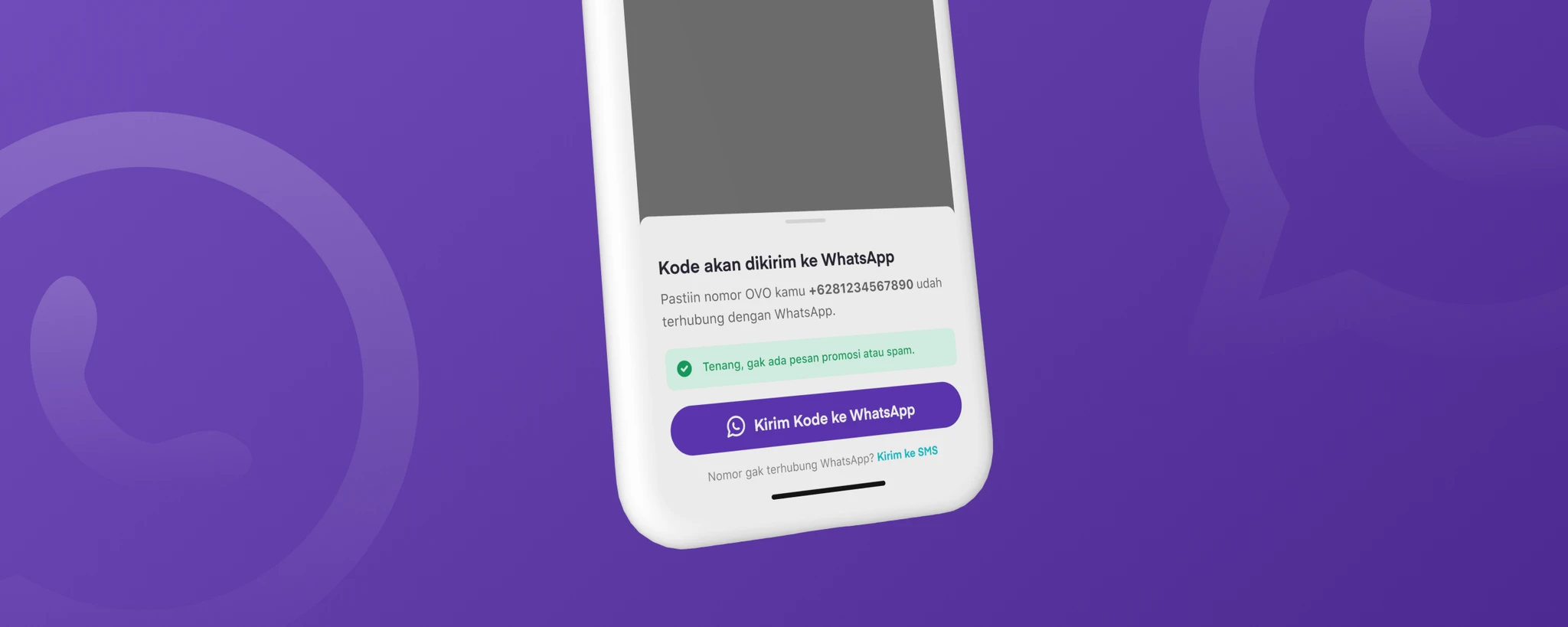

WhatsApp OTP: Reduced Drop-off Rate and Saved OTP Costs
To reduce drop-off rates and saved OTP costs, we experimented by providing an alternative method for login using Whatsapp OTP.
Responsibility
Craft end-to-end experience, usability testing
Duration
3 Months (Oct 2021 - Dec 2021)
Platform
OVO E-wallet is a popular digital payment platform in Indonesia, offering convenient and secure transactions through a mobile application.
Impact 🔥
- Reduce the drop-off rate on the OTP page by 48%
- Save OTP costs by 13%
PROBLEM

The cost of providing OTP through SMS is really high
Login use cases contribute the most to the total SMS cost, over 60%

OTP delivered via SMS has a low level of performance
Many users not receiving SMS and being unable to log in.
PROJECT GOAL
Get better alternative OTPs that are more reliable than SMS in terms of higher OTP success delivery rate & lower cost
RESEARCH INSIGHTS
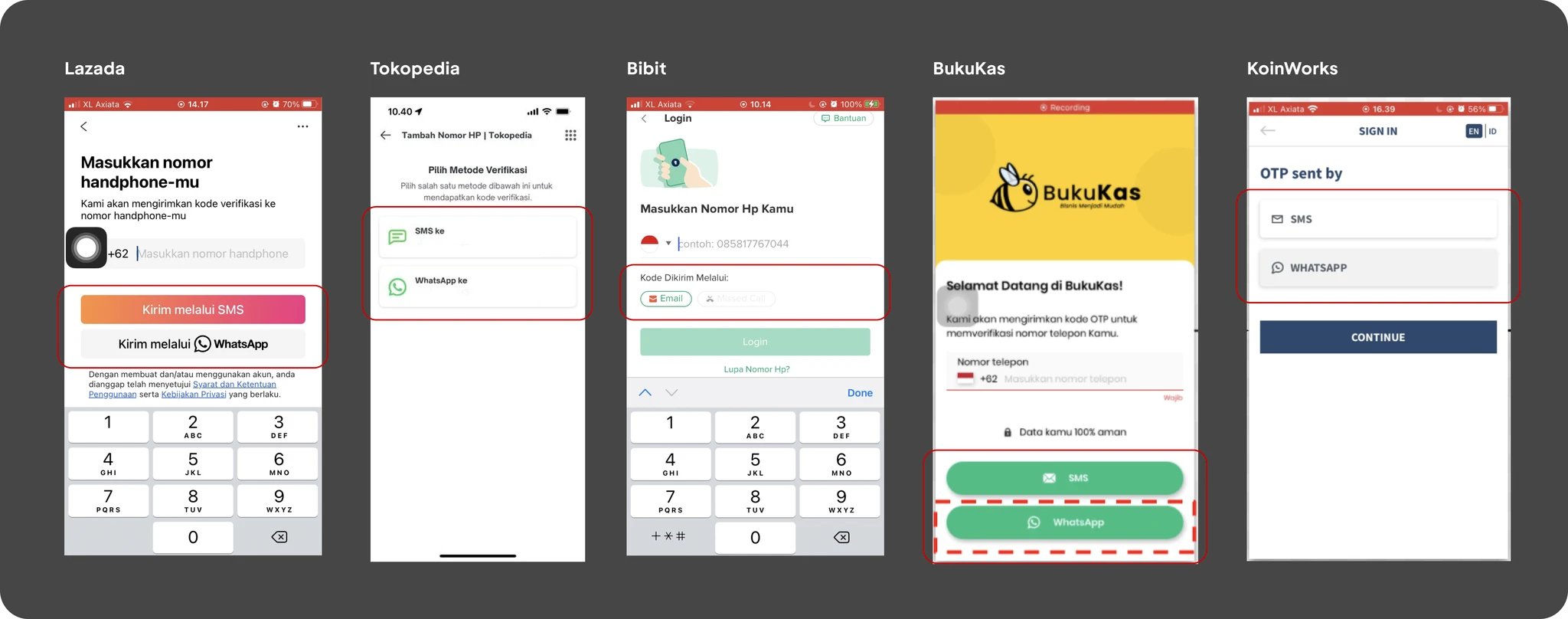
UX researchers are helping us in this process. Our aim is to investigate how our competitors are implementing their OTP process and conduct qualitative research to assess users' willingness to use the new alternative method. The following are the results:
Biometrics, Whatsapp, and Missed Call are alternative OTP methods
We reviewed common methods with the team to identify the most cost-effective and efficient one.
There is a negative sentiment towards WhatsApp OTP
Qualitative research suggests many users doubt using WhatsApp OTP due to competitors promoting their products with the same WA OTP number. This annoyance can lead to users blocking the number, and they may lose access to WhatsApp OTP.
The open option allows users to choose the OTP method they usually use.
We need this insight to design visuals that persuade users to choose the right options. Our competitors treat all options equally, which could lead to users sticking to their usual choices.
SOLUTION
Whatsapp OTP as a new method: This is because it is 50% cheaper than SMS and has better performance.
After consulting with the team, we've chosen WhatsApp as an alternative OTP method to reduce drop off rate and save costs. Furthermore, WhatsApp OTP is simpler to understand as it's similar to SMS, which most people are already familiar with. Once we've determined the optimal OTP method from the research findings, there are two objectives that we must fulfill to maximize the metrics we want to achieve:
How might we eliminate bad sentiment towards WhatsApp OTP?

How might we encourage users to choose WhatsApp OTP?
USER FLOW
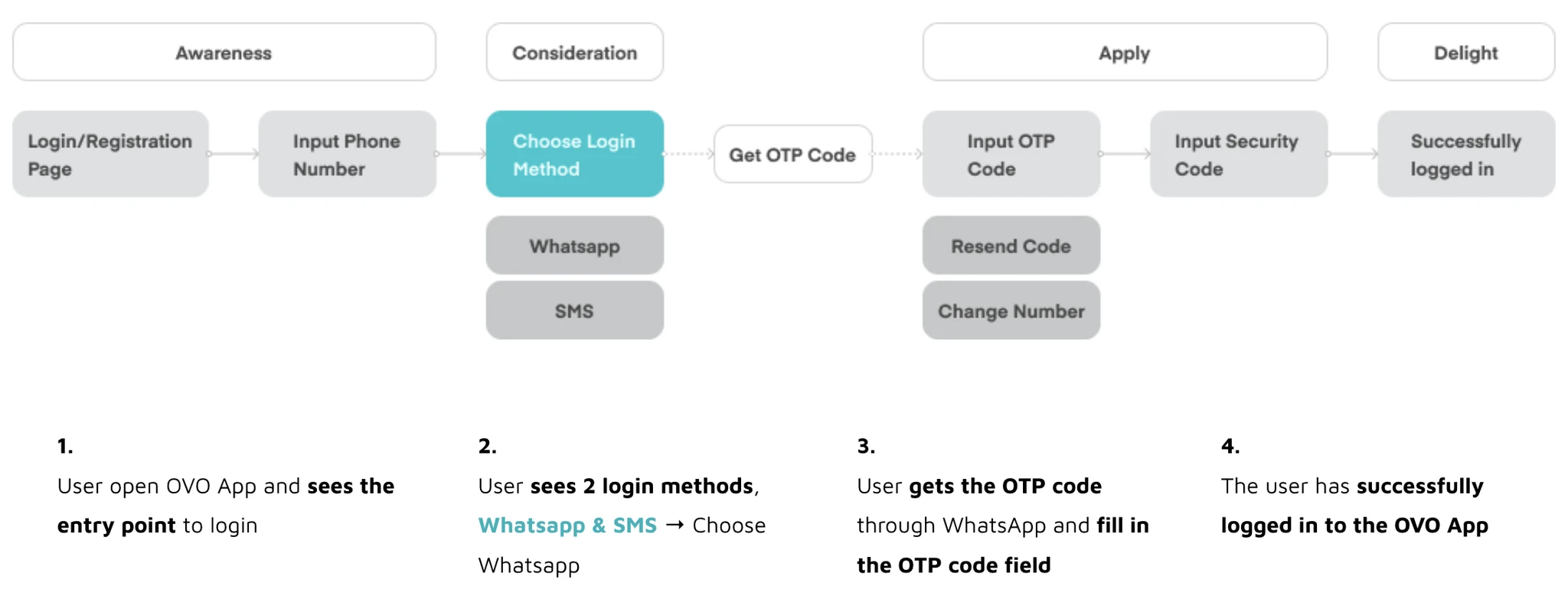
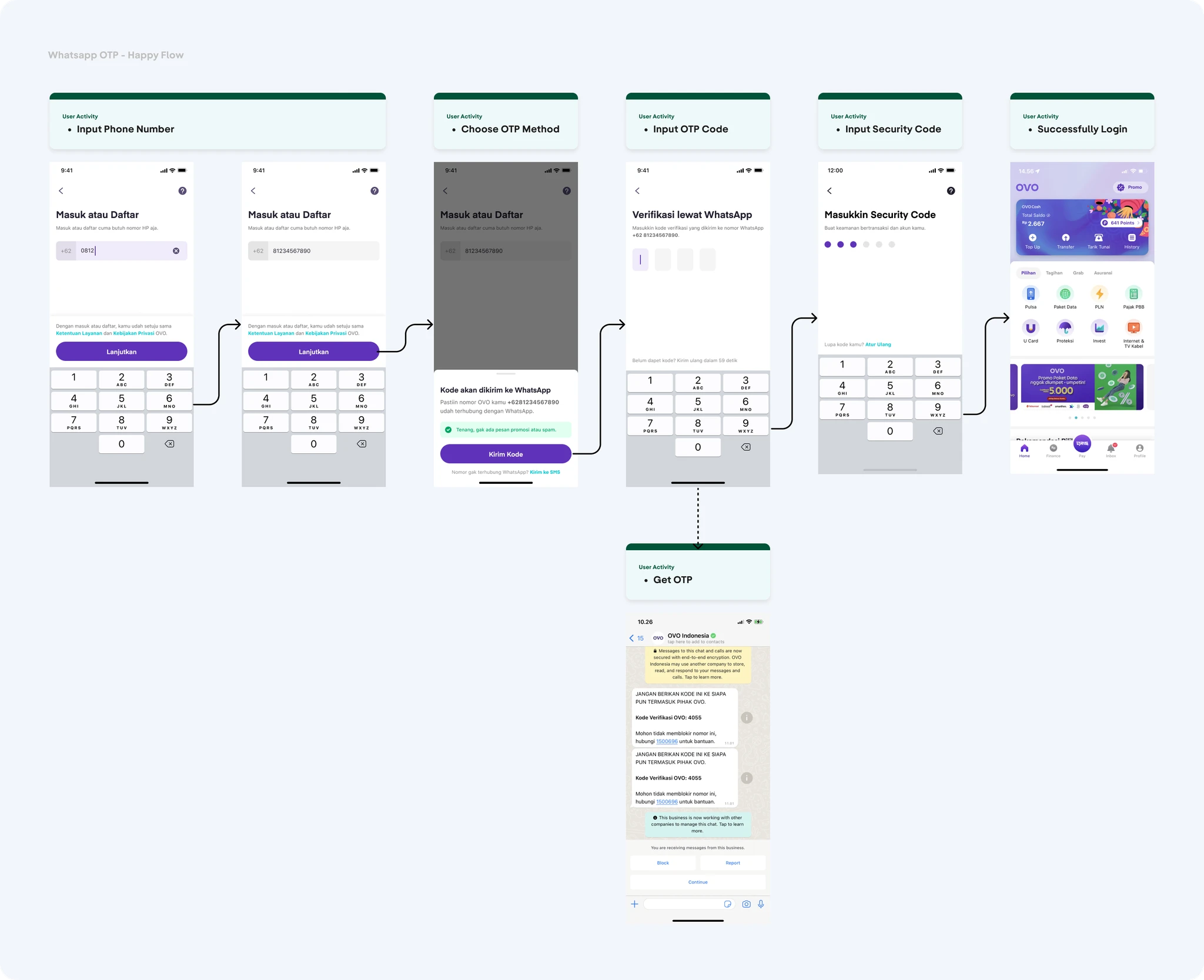
Happy Flow
The flow is not much different from the general login process; the only variation is that we offer the option to choose the OTP method.
DESIGN
We require more OTP steps to prevent user overload with excessive information on one page
By breaking the process into multiple steps, the user can focus on one task at a time, making it easier for them to receive and process the information we provide.
DESIGN
Let's breakdown the design.
Here is a more detailed analysis of the designs I have made.
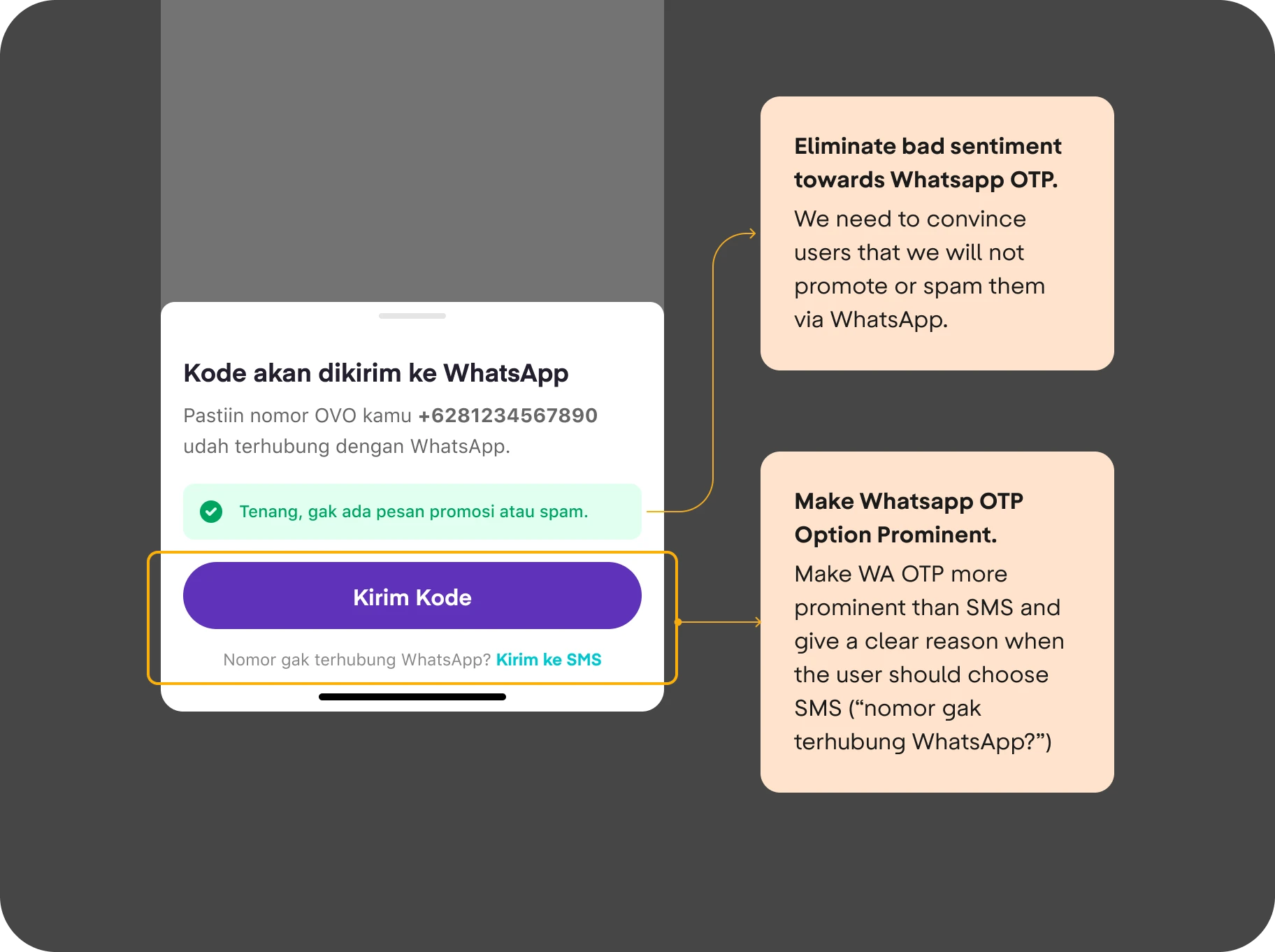
Choose OTP Method Bottomsheet
Main Goal ✨
- Remove any bad sentiments towards WhatsApp OTP.
- Encourage users to choose the WhatsApp method over SMS
Other Exploration
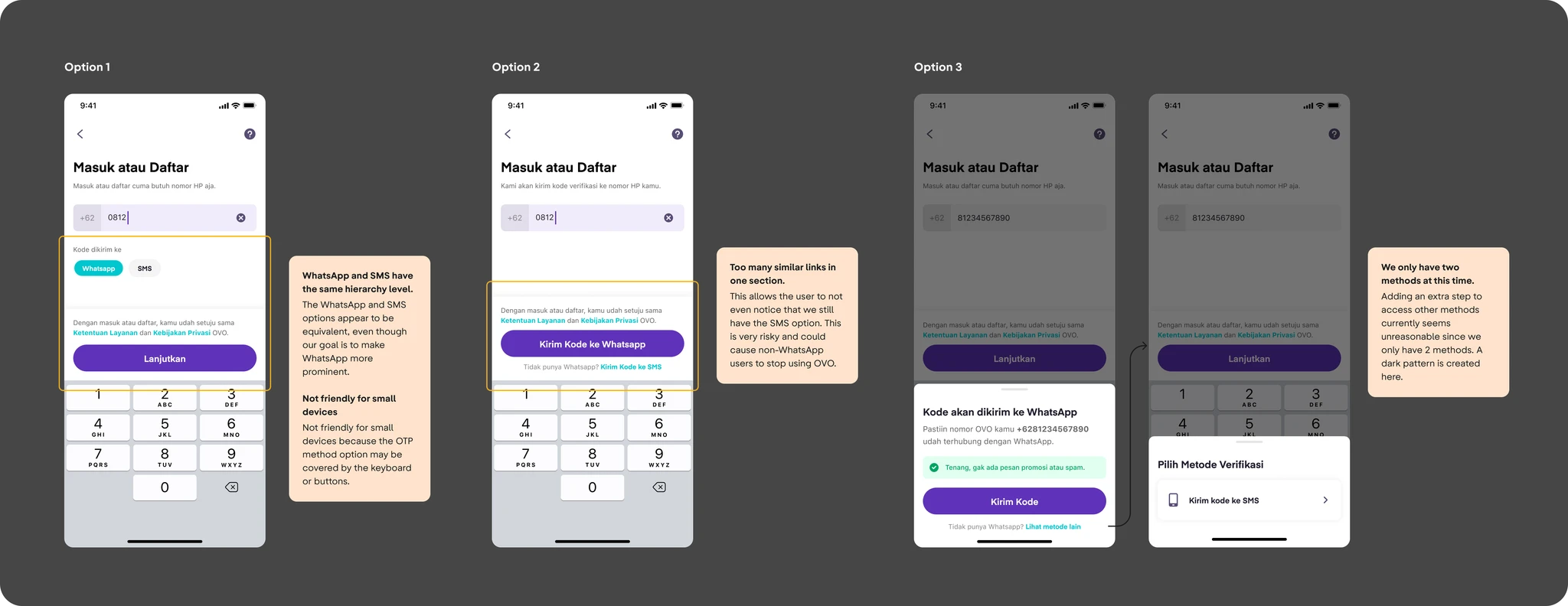
Before choosing the above option, we tried several alternatives to the OTP method. However, these options have drawbacks that make them less desirable.
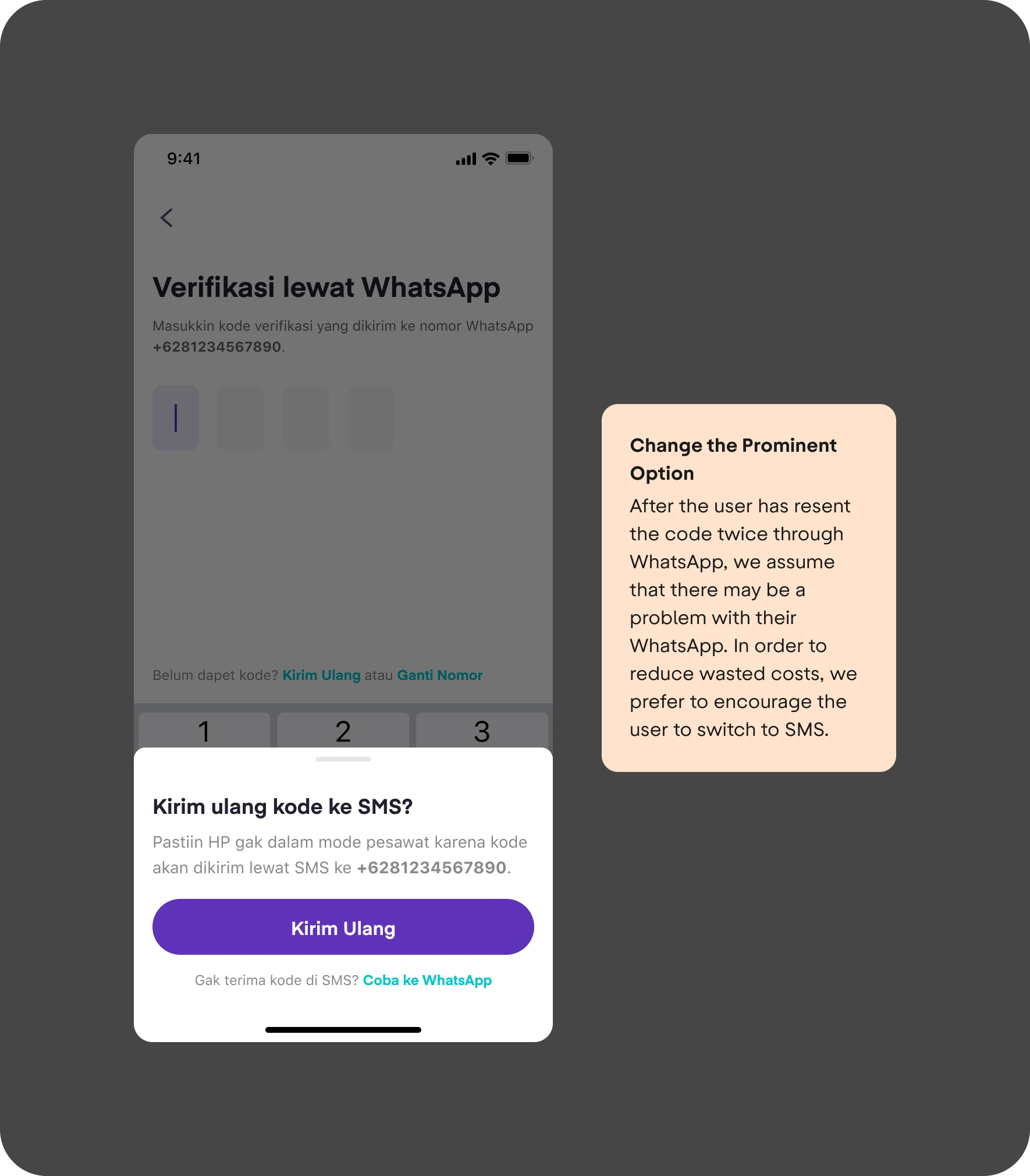
Resend OTP Code
When the user does not receive their OTP code, they can resend it.
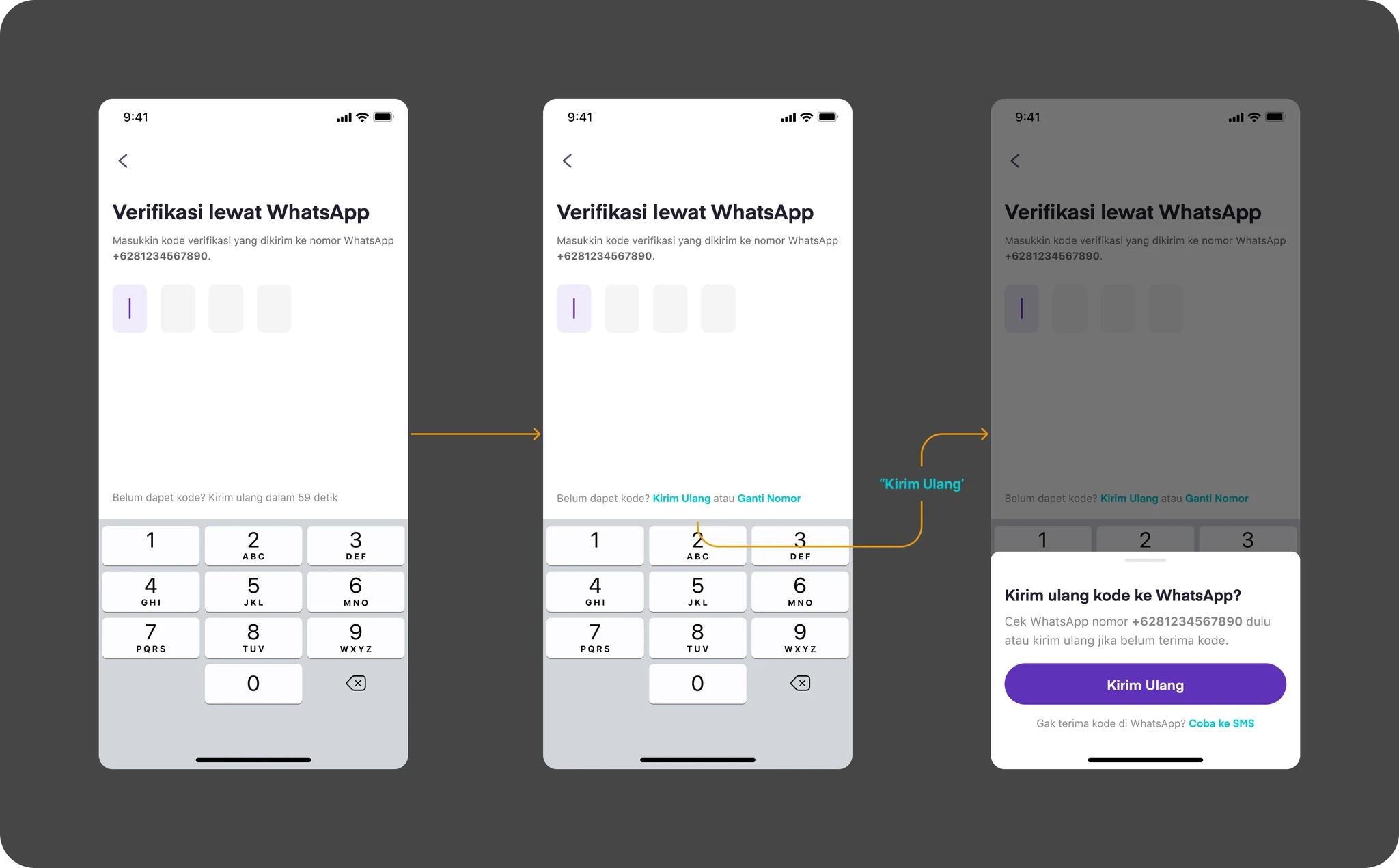
Offering an alternative option if the user still chooses to resend
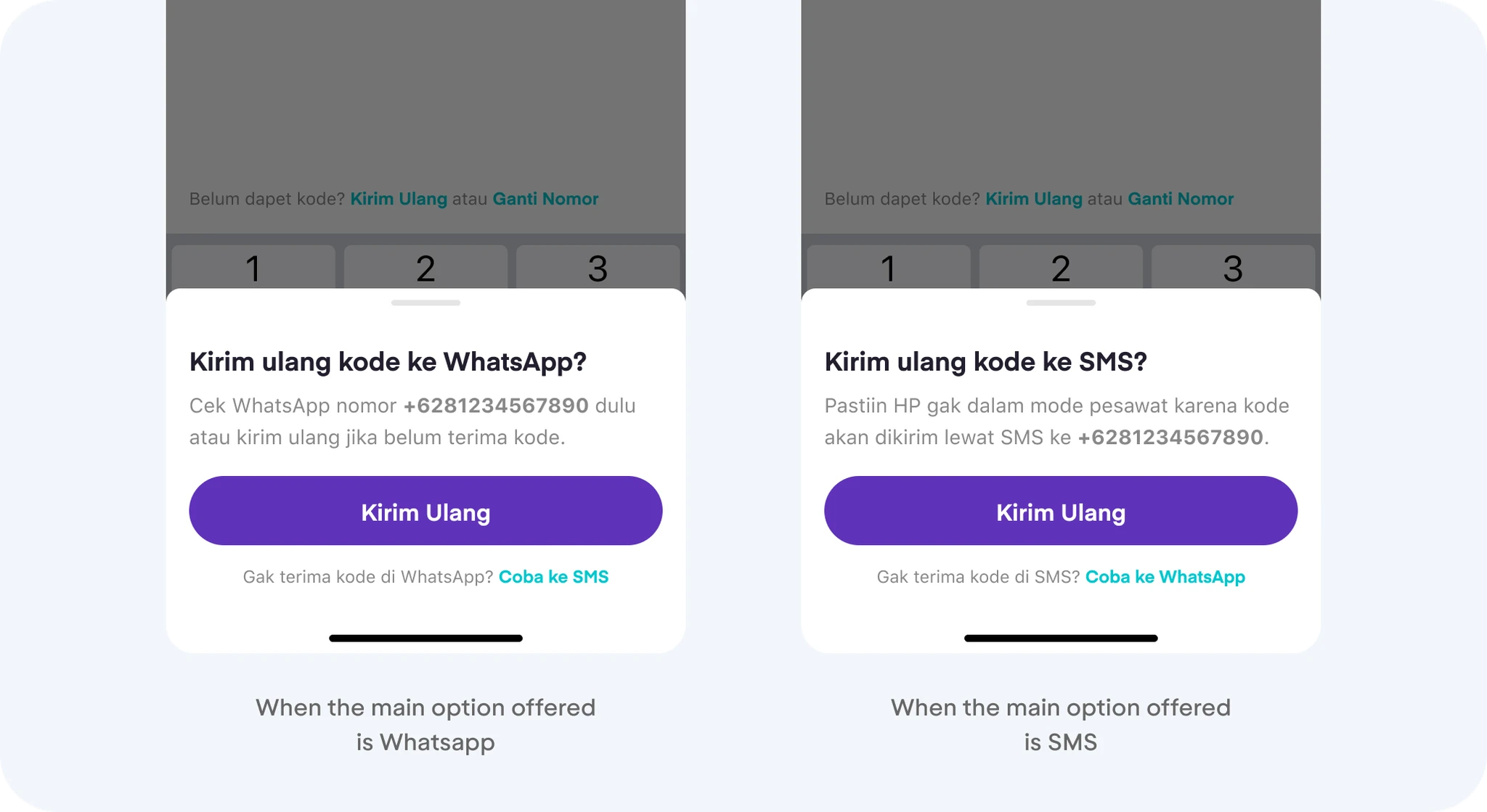
When the user continues to repeatedly resend, we will offer another option because there may be a problem with the previously selected option.
DESIGN VALIDATION
Usability Testing
Although the flow and design appear straightforward, it is crucial to test them with users to ensure their understandability. Here are the key areas we need to validate:
USABILITY ISSUE
Confirm that users can log in using both WhatsApp OTP and SMS.
AWARENESS
Ensure users are aware of prominent changes in options when they re-request OTP codes multiple times.
USABILITY TESTING RESULT
Insights Summary
To be honest, we did not find anything particularly interesting in the usability testing in this case. Everything went very smoothly with almost no issues.
Users can login with WhatsApp and SMS
Users stated that at first glance, the only option visible was WhatsApp, so they tended to choose that method because their initial assumption was that we didn't provide any other options.
However, even though the WhatsApp option is very prominent compared to the SMS option, when given the scenario of not having a WhatsApp account, they can find the SMS option when they want to log in. They will focus on finding what they need.
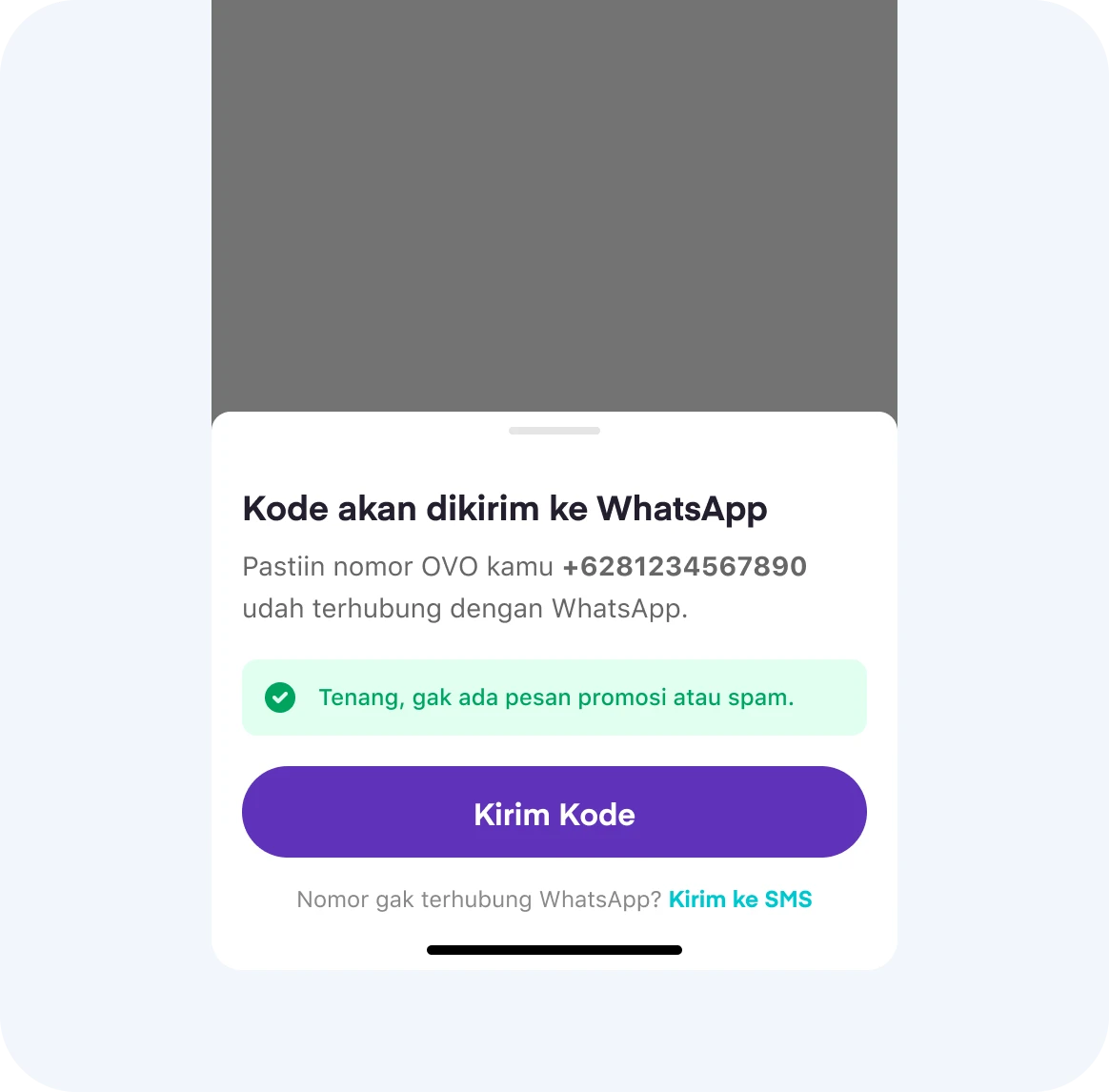
The user may not realize that there are prominent changes in the options when they re-request the code several times.
Apparently, when we change the prominent option but keep a similar design, users not be aware of the change because they expect the code to be sent using the same method as before. This is because users no longer carefully read the bottom sheet and instead immediately press the 'Kirim Ulang' button.
IMPROVEMENT
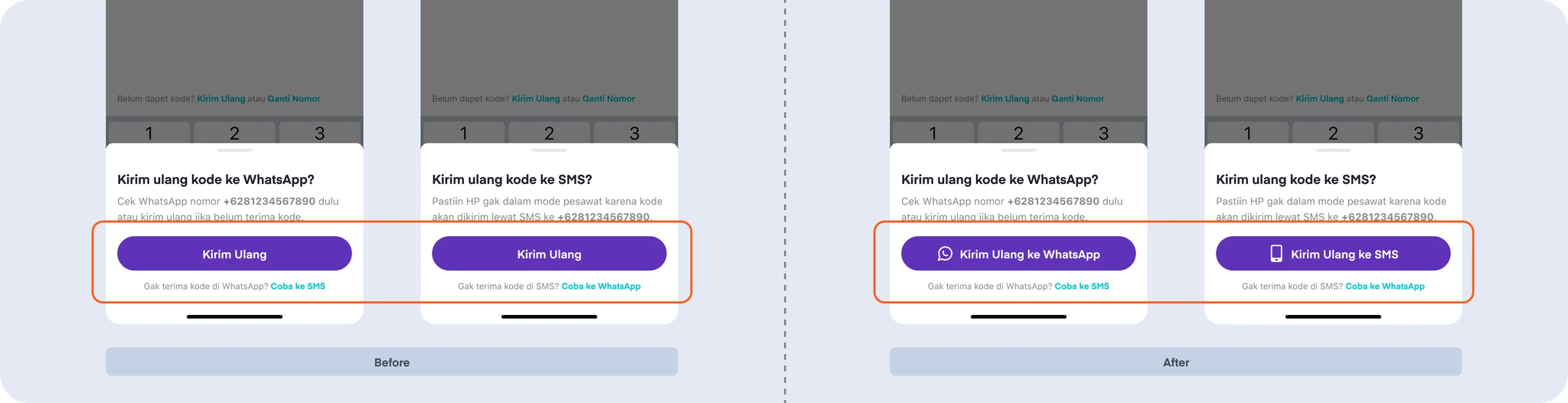
We improved the user interface by adding icons and using clearer words on the buttons.
Based on the test results, which show that users tend to focus only on the buttons, we are adding icons and explanatory words to help users distinguish between the main options for WhatsApp and SMS.
IMPACT
🎉 We were able to reduce the drop-off rate on the OTP page by 48% and save OTP costs by 13%. 🎉
After being released for 4 months, we have achieved satisfactory results by significantly reducing the drop-off rate on our OTP screen. Based on the data, we found that improving delivery rate performance was a key factor in achieving this result. Additionally, our design that strongly encourages users to use WhatsApp OTP has allowed us to save an OTP budget of 13%.
LESSON LEARNED
Users don't read; they just skim.
When we provide different options but with a very similar design, the user will not be aware that there is a change in the options provided. This could potentially lead users to make choices they don't want”
To all the designers, project managers, engineers, and other team members who contributed to this project, I extend my heartfelt thanks. ❤️

CHECK OUT MY OTHER WORKS
OVO Top Up via Indomaret in Grab Platform
We are experimenting with new top-up methods to eliminate the inconvenience of current top-up channels, which has become a barrier for users.
Read More
Better Promo Visibility: Increased Transaction & Reduced the Drop-off
Increasing the promo visibility during the transaction journey. We were successful in increasing transaction value by 10% and reducing the drop-off rate by 13%.
Read More